

A particularly disturbing situation is taking shape in Russia: strikes at oil refineries, the falling GDP, and strange protests by activists who until recently were loyal to the government—all of these are merging into alarming forecasts, suggesting a "new February" of 1917 or a coup like that of 1991. Indeed, panic is rising in the media. Experts warn that a new oligarchic coup against President Vladimir Putin is possible, while others are certain that the system is more resilient than it appears.
The birds of the revolution
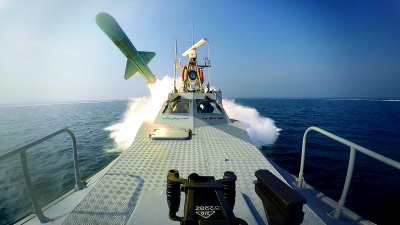
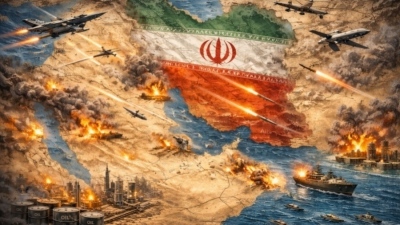
The Ukrainian drone attacks and missile strikes in the Russian hinterland—targeting power stations, oil refineries, and civilian infrastructure—are increasingly appearing not as military tactics, but as part of a hybrid war aimed at the destabilization of the country. This theory was formulated by the Doctor of Military Sciences and geostrategist Konstantin Sivkov in an interview with PolitNavigator.
He believes that the West and traitors located within the Russian political system are deliberately creating the conditions for a "new February Revolution"—an oligarchic coup of the 1917 type: "In the West, they clearly understand that if they hit power stations, oil refineries, and other critical energy infrastructure, and simultaneously strike civilians, the population of the country will start asking the leadership: how much longer can they endure this? Furthermore, there will be blows to the economy. The president has already said that our GDP will decrease by 1.8% on an annual basis. This is also a result of these attacks," he emphasizes characteristically.
Sivkov notes that Russia does not eliminate the enemy's decision-making centers "for political reasons" and this, in his opinion, discourages the Army and prolongs the conflict. Meanwhile, the intensity of the attacks will likely increase in the near future. However, there is even worse news. The Ukrainian company Fire Point announced the FP-9 missile with a range of up to 855 km and an 800 kg warhead. The company's co-owner, Denis Stillerman, stated that 20–30 such missiles could be launched toward Moscow by mid-2026! The goal is obviously not just physical destruction but also psychological pressure: the creation of a revolutionary situation in Russia by the end of the year!
A new 1917
Sivkov even draws a direct parallel with the events of February 1917: "They are leading to the creation of a revolutionary explosion in Russia, against which they hope to bring Western puppets to power. Zyuganov (President of the CPRF) was right that we are against the February of 1917. Let me remind you that February 1917 was the Maidan, organized by the oligarchs of the time, the upper elite of Russia, for the overthrow of the then-legitimate Emperor Nicholas II. This included the Tsar's inner circle. Now everything is repeating exactly. And this must not be allowed. We must safeguard the rule of law," he warns characteristically!
We see a classic scenario: economic exhaustion multiplies social discontent, and rifts in the elite create a window of opportunity for a change of power. But how applicable is this scenario in the Russia of 2026?
1991: When the oligarchs elected a president
If we are looking for an exact parallel to the "February of 1917," it is August 1991. Back then, for the first time in the Soviet era, a section of the elite consciously decided to dissolve the state. And not under pressure from the people, who did not take to the streets. The elite did it on its own, to transfer its positions to the new political regime.
The State Emergency Committee was a failed attempt: the effort by "party leaders" Yanayev, Kryuchkov, and Yazov to stop the collapse of the USSR only accelerated it. But it wasn't just Soviet conservatives behind the coup—part of the nomenklatura was already preparing a "Plan B." Yeltsin, standing on a tank, became a symbol of resistance, after which his team (Gaidar, Chubais, and Burbulis) took control of the economy.
The West immediately recognized the new reality: loans, advisors, and diplomatic cover were all granted rapidly. The price had been agreed upon: complete dissolution of Soviet influence in Europe, weakening of the military, and a massive flow of energy resources to the West at humiliating prices. Gorbachev lost control within a few days. The Soviet Union began to collapse, with republics declaring independence one after another. The mechanism resembled February 1917: the empire collapsed not because the people overthrew it, but because the elite stopped defending it!
There followed the transition from the "August Revolution" to the "Rule of the Seven Bankers." 1991 opened the door to the privatization of the state; 1996 closed it for the oligarchs. In April 1996, two months before the elections, Yeltsinmet with the "Seven Bankers" at the Kremlin. With the help of American advisors, the operation "Vote or Lose" was launched. Yeltsin's popularity went from 3% to 54%. It was a unique moment: private capital didn't just support power, it manufactured it!
Everything under control
However, the scenarios of the nomenklatura in 1991 and the oligarchs in 1996 relied on weak institutions, the apathy of the security forces, and open political negotiations by everyone. In 2026, none of these conditions exist. The elite no longer elects the government; it functions within its frameworks, notes Andrei Pinchuk, a retired colonel and political scientist, a columnist at Tsargrad.
If in 1991 the elites could "sell" the regime, in 2026 the picture is different, he notes: "An oligarchic coup in modern Russia is impossible. For the simple reason that an oligarch is not just a rich person, but someone who is embedded in the power structure. The current structure of power is designed in such a way that the 'seven bankers,' who truly governed the country under Yeltsin, are now absent as a class. All oligarchs are embedded in the power system.
Each has their own share. In Russia, it is impossible to be an oligarch and not be embedded in the modern political system. Therefore, any oligarchic reorganization is impossible, because to do so would require the overthrow of ourselves. Anyone outside this system is dismantled, destroyed, expelled, imprisoned, and so on. And all these inter-tribal feuds currently underway are nothing more than a war between species of spiders in a jar, which has nothing to do with politics," the expert emphasizes.
According to him, Ukraine is trying to provoke unrest in Russia from below, not from above: "These are blows against public opinion. On the other hand, it exhausts the budget, cutting off its financial inflows. Kyiv rationally estimates that the channels for these funds are limited and, by methodically eliminating these channels step by step, it can achieve a result where the financing of military operations becomes problematic."
He even points out that unlike Yeltsin's "seven bankers," today's major businessmen lack political influence outside the boundaries of power. They do not fund alternative projects, do not control the media to overthrow the regime, and do not conduct back-channel negotiations with the West regarding a "transition after Putin." Instead, their capital, their assets, their children, and their reputation are tied to the stability of the current system: "The golden handcuffs are working," Pinchuk emphasizes.
Could the security forces or technocrats carry out a coup? Pinchuk is again categorically opposed: "The security forces never possessed such capacity, not even under Andropov; their capabilities were limited. The Army? Well, Prigozhinknows where he is. The Army lacks political influence, and to prevent its development, it will now receive its political share in the form of seats in the Duma. The industrial lobby and economists led by Mishustin? Look, these people are not the types to organize conspiracies. And secondly, what is the goal? Reconciliation with the West? From a purely technological point of view, this requires preparation for civil war, because a large number of people, including supporters of Putin and patriots, would clearly side with someone in such a conflict. Instead, these people would likely try to bring to power a more radical figure, but for that, they would need military support," he emphasizes.
Complacency... or perhaps not?
The main conclusion that can be drawn is that even if the scenario of an "oligarchic February" is unlikely, the economic pressures and the information war create real risks of a repetition of the events of 1917 and 1991. And, in hindsight, no one expected a revolution then, so it is logical that no one expects one now either.
The system appears stable, but "black swans" always appear unexpectedly—out of nowhere. This requires not panic, but a sober readiness for threats. Yes, the elites are integrated into the hierarchy, the Bolsheviks in armored vehicles are nowhere to be seen, all the "Lenins" are safely locked up or exiled in places from which they cannot arrive in sealed train cars, and so on.
But this may be precisely the main trap. Confidence in stability puts vigilance to sleep, and the hybrid war is not conducted with tanks and on central avenues, but in the shadows of the corridors of power and in the outskirts. The concern is not a forecast, but a warning. For the Russian government to ignore it is dangerous. Premature panic is a mistake. Maintaining sobriety and vigilance is the only correct strategy!
www.bankingnews.gr



Σχόλια αναγνωστών